
The Phragmites Touch

Snow-covered phragmites seed head in winter Michigan wetland, black and white detail of invasive common reed.
In Michigan, invasive phragmites, pronounced frag-my-tees, is not simply roadside vegetation. It signals a structural shift in wetland and drainage systems. The non-native strain of common reed spreads through underground rhizomes, forming dense, connected stands that gradually replace diverse native plant communities.
Michigan does have a native subspecies of common reed. It grows more openly and coexists with surrounding vegetation. The invasive European lineage is the form responsible for aggressive expansion and high-density stands, particularly in roadside corridors and disturbed landscapes.
The loss of plant diversity affects more than visual character. Layered vegetation in wetlands and drainage corridors slows runoff, stabilizes soil, filters sediment, and distributes water across the landscape. When a single species dominates those areas, vegetative structure narrows and long-term management requirements increase. Restoration becomes more complex. Maintenance costs rise. Systems that once relied on plant diversity begin to depend more heavily on engineered intervention.
Invasive phragmites typically establishes where disturbance and consistent moisture intersect, including highway shoulders, drainage ditches, retention basins, and shoreline edges. Its expansion is gradual and persistent.
Land will change. That part is certain. The question is whether we shape that change early through design, or respond later when dominance has already set the terms.
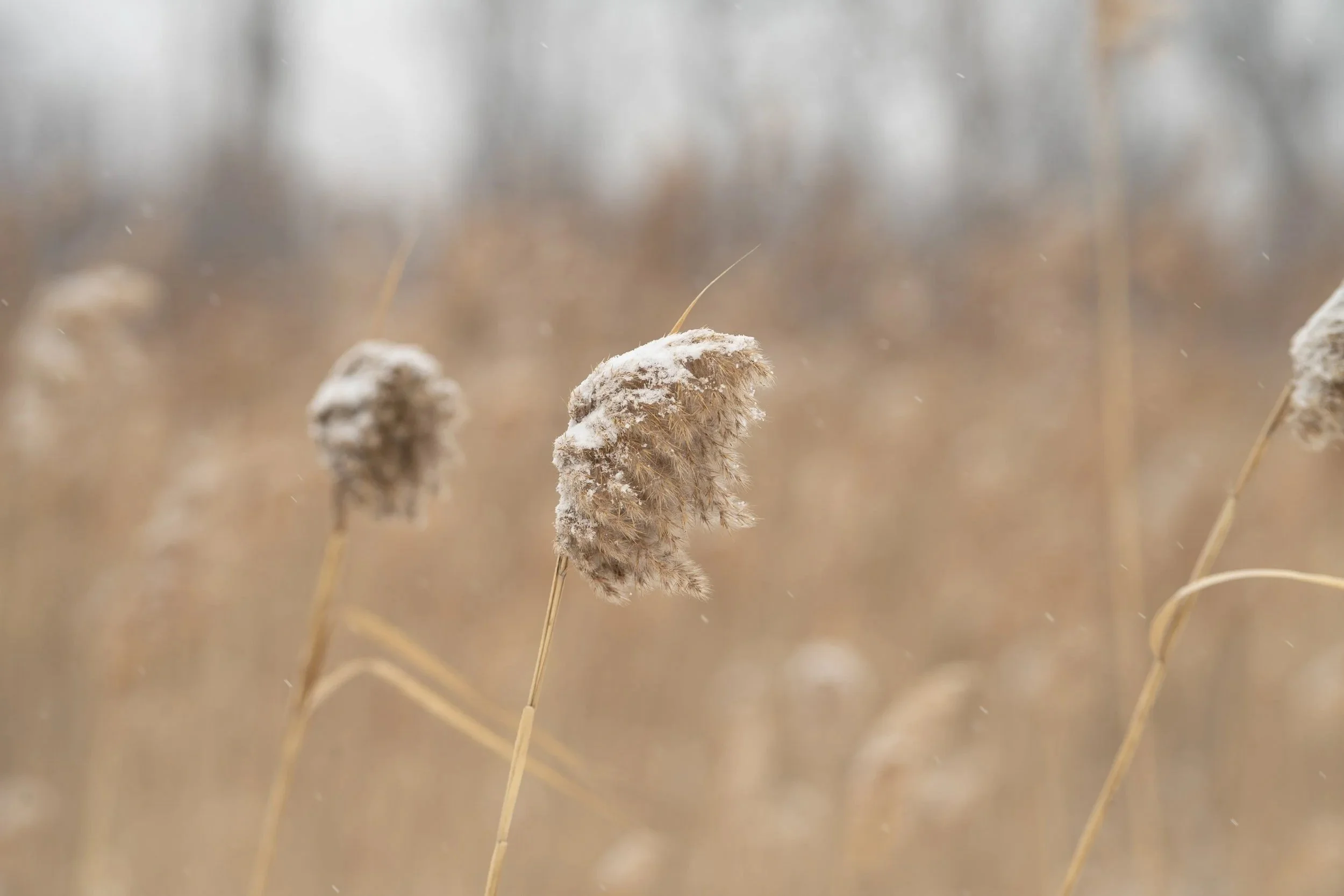
Snow-covered invasive phragmites seed head in Michigan wetland, highlighting winter persistence of common reed.